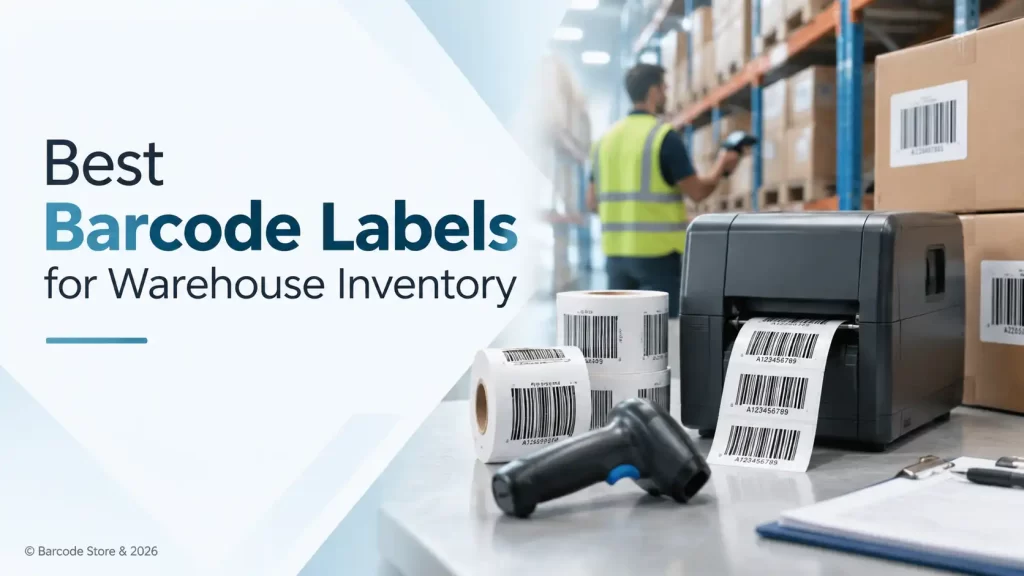
A warehouse barcode that scans perfectly at the packing desk can become a problem once it is placed on a dusty rack upright, a shrink-wrapped pallet or a carton moving through a Dubai cold-room. The right barcode labels for warehouse inventory are not simply the cheapest labels that fit the printer. They need to remain attached, readable and easy for staff to scan where the work actually happens.
For most indoor warehouse operations, thermal-transfer paper labels are a sensible starting point for cartons, bins and short-to-medium-term stock identification. Rack locations, freezer areas, outdoor staging and long-life inventory labels usually justify synthetic material and a more suitable adhesive. The correct choice depends on the surface, expected label life, scanning distance and printer already in use.
Choosing barcode labels for warehouse inventory
Start with the label’s job rather than the printer. A bin label that is scanned several times a day has different requirements from a pallet label used for one delivery cycle. It is common to use more than one label type in the same facility.
| Application | Common label approach | What to check |
|---|---|---|
| Rack uprights and shelving | Large synthetic rack labels with durable print | Scan distance, metal or painted surface, dust and abrasion |
| Plastic bins and tote boxes | Paper or synthetic bin labels | Curved surfaces, repeated handling and cleaning chemicals |
| Cartons and case picking | Thermal-transfer paper labels | Print volume, scuffing and how long cartons remain in storage |
| Pallets and stretch wrap | Larger paper or synthetic pallet labels | Barcode size, placement, wrap texture and forklift scanning distance |
| Cold rooms and freezers | Synthetic labels with cold-surface adhesive | Application temperature, condensation and label life |
The label face should give the barcode enough clear space. Trying to place a long code, item description, quantity and logo on a tiny label usually produces bars that are too narrow for reliable scanning. A slightly larger label often costs less than time spent rescanning stock.
Label sizes for racks, bins, cartons and pallets
There is no universal warehouse label size, but the physical item provides a useful starting point. Rack labels need to be visible from the aisle, so they are often larger than a bin location label. A pick-face bin may only need a compact code and a bold location number, while a pallet label may need a much larger barcode that remains readable through stretch wrap.
- Rack labels: Use a format that allows large human-readable location text as well as the barcode. The scan distance from a handheld scanner matters more than making the label compact.
- Bin labels: A smaller label can work well where staff scan close to the bin. Leave enough margin around the barcode and avoid placing it across sharp curves or moulded ridges.
- Carton labels: Match the label to the available flat panel. A carton label that wraps around an edge is more likely to crease and scan poorly.
- Pallet labels: Use a larger format with readable text for forklift operators. Apply it on a reasonably smooth, visible side rather than over loose film folds.
SoluWise can supply warehouse barcode labels and inventory barcode labels in formats suited to the label layout and application surface. For a new warehouse setup, it is usually sensible to confirm the rack beam or upright dimensions, bin face size and the intended barcode content before ordering a large batch.
Paper or synthetic stock?
Paper labels are often the practical choice for ordinary dry storage. They print clearly, work well for cartons and internal stock movement, and are generally more economical. For labels used briefly on clean cartons or bins inside an air-conditioned warehouse, paper is rarely a mistake.
Synthetic stock costs more, but it earns its place where paper tears, absorbs moisture or wears out. Polypropylene and polyester-style materials are commonly chosen for rack labels, reusable bins, freezer applications and long-term asset or location identification. A label on a painted rack in a busy picking aisle may be rubbed by cartons and hands hundreds of times; that is where a synthetic label is usually worth considering.
Do not specify synthetic material automatically for every item. A disposable carton label moving from receiving to dispatch within a few days may not need it. The useful question is: what will damage this label before its job is finished?
Adhesive selection for dusty, cold and difficult surfaces
Adhesive failures are often blamed on the label material, but surface preparation and application conditions are just as important. Labels applied to dusty steel, damp plastic or cold cartons may lift even if the face stock looks suitable.
For normal warehouse shelving, permanent adhesive is commonly appropriate once the location system is settled. Removable adhesive can be useful during a temporary racking change or a pilot project, though it is not the right answer for a permanent location label that must survive regular contact.
- Dusty racks: Wipe the application area before labelling. No adhesive performs well over a layer of warehouse dust, oil or loose paint.
- Cold rooms: Specify that labels will be applied in a cold environment or onto cold goods. Standard adhesive may not bond well if the surface is already chilled or damp.
- Plastic totes: Test on the actual bin material. Some plastics are difficult for ordinary adhesives, especially if they have a textured or low-energy surface.
- Stretch wrap: Apply pallet labels to a reasonably flat area of the outer wrap. Deep folds and tension changes can distort the barcode and pull at the adhesive.
In UAE warehouses, heat can also matter. Labels held in a hot receiving area, container yard or non-air-conditioned loading zone may face more adhesive stress than labels stored indoors. A sample test on the real surface is more useful than choosing by material name alone.
Barcode symbology and scan readability
Warehouse labels do not need the same barcode type in every situation. Code 128 is commonly used for internal inventory, location and carton identifiers because it can carry letters, numbers and other characters efficiently. Code 39 may still be used in older systems, although it generally takes more space for the same data.
For simple location labels, a one-dimensional barcode is usually easy to scan and straightforward to print. A 2D code, such as a QR code or Data Matrix, can carry more data in a smaller area, but it needs compatible scanners and should not be selected just because it looks modern. If warehouse staff use standard linear scanners, changing to a 2D code can create an avoidable equipment issue.
Readability depends on more than the symbology. Barcode height, bar width, contrast, quiet zones and print quality all matter. Black thermal-transfer print on a clean white label remains a dependable choice for most warehouse barcode labels. A coloured background, glossy film glare or a barcode printed too close to the label edge can reduce scan performance.
Printing a barcode creates a machine-readable symbol; it does not by itself create a product numbering system or make an item GS1 registered. Internal rack and bin codes can be designed around the warehouse management process, provided the scanner and software are set up to recognise them.
Printer and ribbon matching
Thermal-transfer printing is the usual recommendation for inventory labels that need to last. It uses a ribbon to transfer ink onto the label surface, producing a print that generally holds up better to rubbing and handling than direct thermal print. Direct thermal can suit short-life dispatch or temporary picking labels, but heat, sunlight and friction can darken or fade the image over time.
Ribbon selection should match the label material and working conditions. Wax ribbons are commonly suitable for paper labels in ordinary indoor use. Wax-resin ribbons provide better resistance where carton labels are handled frequently. Resin ribbons are generally the better fit for synthetic labels where durability, chemical exposure or abrasion resistance matters.
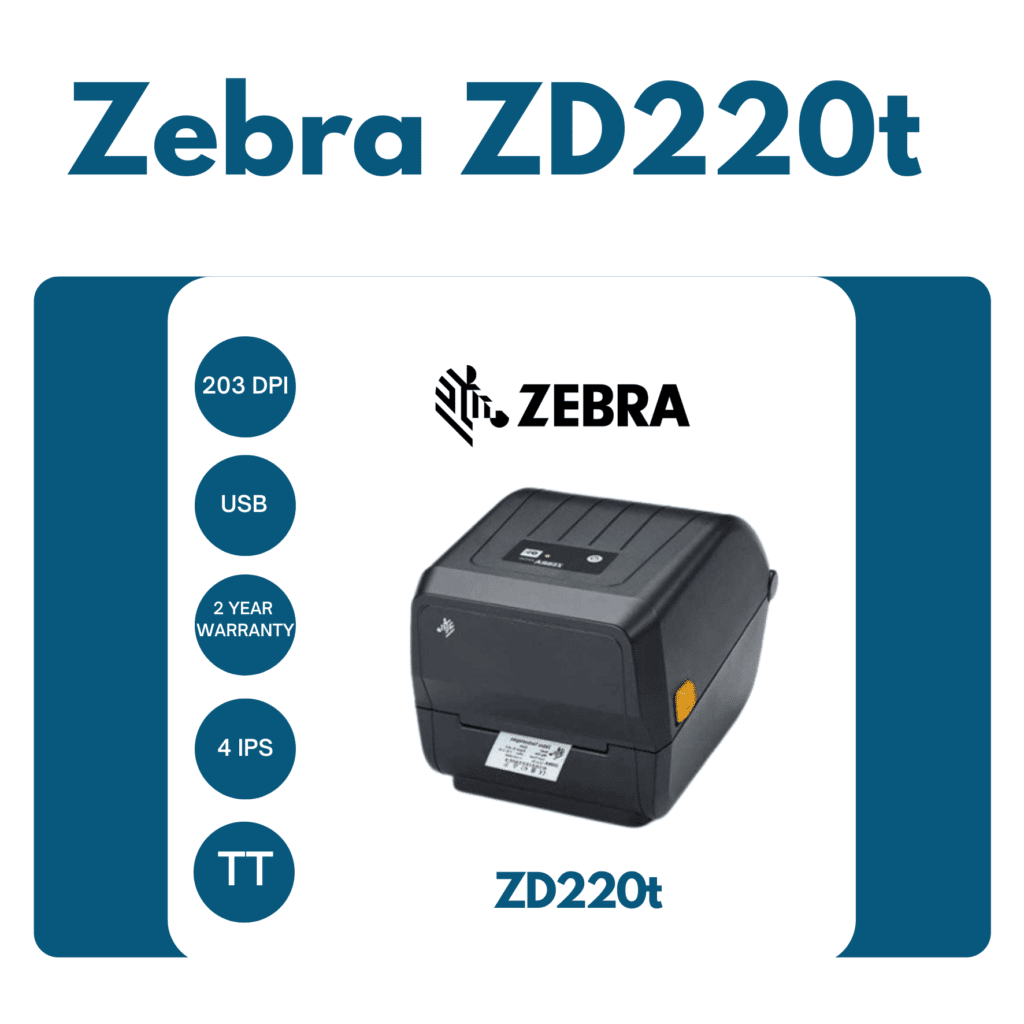
Zebra, TSC and Honeywell thermal printers are all commonly used in warehouse environments, with suitable desktop and industrial options depending on print volume and label size. For a few hundred standard labels a day, a desktop printer may be enough. A warehouse producing continuous rack, carton and pallet labels during long shifts should consider a printer designed for higher-duty use and larger ribbon capacity.
Printer compatibility should be checked before labels are ordered. Confirm the print method, label width, core size, roll outside diameter and ribbon type accepted by the printer. A label roll can physically look right and still be unsuitable for the printer’s media path. SoluWise can help match warehouse labels and ribbons to Zebra, TSC or Honeywell equipment without guessing from a photograph of an old roll.
Where SoluWise label products fit
Warehouse barcode labels suit general identification across receiving, put-away, picking and dispatch. They are a practical choice where a warehouse needs consistent labels across different stock movements, with material and adhesive selected for the environment.
Inventory barcode labels are suited to item, carton and stock-control identification. They work well for businesses that need labels printed with SKU, batch, location or internal reference data, provided the barcode format matches the scanner and software in use.
Rack labels are for fixed warehouse locations: aisles, bays, levels and pallet positions. They normally deserve a more durable material than a short-life carton label because they remain in place and receive regular scanning and contact.
Bin location labels fit pick bins, tote boxes and shelf faces. They should be sized for close-range scanning and placed where a worker can scan them without moving stock out of the way. If bins are washed, used in chilled storage or reused heavily, synthetic stock is the safer direction.
Common purchasing mistakes
- Ordering a small label before deciding how much data must be printed.
- Using standard permanent adhesive on dusty, chilled or wet surfaces without a real-world test.
- Choosing direct thermal for labels expected to remain readable for months.
- Buying ribbons separately from labels without checking material compatibility.
- Printing rack labels with barcode bars too small for the scanner distance.
- Applying labels across carton edges, stretch-wrap folds or uneven plastic surfaces.
Frequently asked questions
What labels are suitable for warehouse racks?
Synthetic rack labels are usually the better choice for permanent locations, especially where racks are dusty, frequently scanned or exposed to abrasion. Paper can work for temporary location changes in a clean indoor area.
Can paper inventory labels be used in a warehouse?
Yes. Paper thermal-transfer labels are a sensible option for dry indoor cartons, short-term stock identification and many bin applications. They are less suitable for moisture, heavy rubbing or long-life fixed labels.
What barcode type is used for bin labels?
Code 128 is commonly suitable for bin locations because it handles letters and numbers efficiently. The warehouse system and scanner configuration should determine the final choice.
Do cold-room labels need special adhesive?
Usually, yes. Labels applied in cold conditions or onto chilled surfaces need an adhesive intended for that application. The temperature at the time of application matters, not just the storage temperature afterward.
Which ribbon should be used for synthetic warehouse labels?
A resin ribbon is commonly selected where synthetic labels need stronger resistance to rubbing or exposure. The exact ribbon should still be matched to the face material and printer.
Can one printer handle carton, rack and pallet labels?
It can if the printer supports the required label widths and media types. In practice, the largest pallet label and the expected daily print volume usually set the requirement.
A practical buying rule
Choose paper labels for clean, dry and short-life work. Move to synthetic stock when labels must survive repeated handling, cold storage, moisture or long-term rack use. Then match the adhesive, barcode size and ribbon to the actual surface and scan conditions, not the ideal conditions on paper.
If the label size, warehouse environment or printer compatibility is unclear, send SoluWise the existing roll details, printer make and a photo of the application surface. We can suggest suitable warehouse barcode labels, inventory barcode labels, rack labels or bin location labels before a full order is placed.